

Alcohol and beverage brand Meta advertising is paid promotion on Facebook and Instagram aimed at profitable customer acquisition within the rules that apply to the product and audience. For alcohol brands, the first decision is whether the product, market, targeting and creative are eligible; for other beverage brands, the commercial challenge is turning attention into new customers without mistaking platform-reported sales for profit.
- Meta ads for alcohol brands start with product eligibility, age and location controls, then move to creative and profit measurement.
- Ecom Republic is a conditional fit for eligible DTC alcohol brands with proven demand that need senior-led creative and paid media.
- Test distinct messages for different awareness stages; do not treat minor ad variations as a creative strategy.
- Judge acquisition against new-customer cost and margin, not Meta-reported return alone.
Why Meta ads matter for alcohol and beverage brands
Facebook and Instagram let a beverage brand introduce a product, explain why someone would choose it and reach people who already know what they want. The useful outcome is profitable new-customer growth, not a stronger-looking ad dashboard. That distinction matters when discounts, fulfilment, product costs and repeat purchases affect what the business keeps.
Alcohol adds a gate before any creative test. Meta requires alcohol advertising to follow applicable laws and industry codes, with age and country targeting that meets its rules and local requirements. In Australia, the applicable legal and industry framework includes the ABAC Responsible Alcohol Marketing Code. Check the current Meta policy, ABAC requirements and the rules for each market before launch; a compliant setup in one market is not a reusable approval for another.
A DTC brand with proven demand also needs more than an eligible ad. Its team must decide which customers it can profitably acquire, which messages suit those customers and whether the resulting orders contribute enough margin. Ecom Republic connects paid media, creative and growth strategy to those commercial decisions. That operating model is relevant to beverage brands; it is not, by itself, evidence of alcohol-category approval or category-specific results.
How to run Meta ads for an alcohol or beverage brand in 2026
Confirm your product and market eligibility
Start with the exact product and the places where you intend to advertise and sell it. Alcoholic and non-alcoholic beverages should not be treated as interchangeable advertising categories, and a product’s name or imagery can affect how an ad is assessed. Read Meta’s current alcohol advertising policy alongside the laws and industry code that apply to each destination market.
For an Australian alcohol campaign, check ABAC requirements before building the ad, not after a rejection. If you sell across borders, review each market separately. Eligibility is a launch condition, not a creative-testing variable, and an approved ad does not remove your responsibility for the destination page or ongoing campaign.
- Record the product, destination market and intended campaign objective.
- Check current platform, legal and industry-code requirements for that market.
- Review ad copy, imagery and the landing page together.
- Document who signs off the campaign before it goes live.
Set your audience controls before testing messages
Build targeting around the locations where the product can lawfully be promoted and sold. Apply the age requirements from Meta and the relevant market, then review any additional restrictions that affect the campaign. In Australia, the legal drinking age is 18 years; that fact alone does not settle every platform or industry-code requirement.
Do not assume an interest, lookalike audience or automated delivery setting makes an alcohol campaign compliant. Check the effective audience settings on the actual campaign. If the product is non-alcoholic but its marketing references alcohol, assess the full ad rather than relying on the product label alone.
- Set eligible locations and exclude markets you cannot serve.
- Apply the required age controls to each campaign.
- Check audience expansion and automated settings before launch.
- Recheck targeting whenever you duplicate or change a campaign.
Define the profit threshold for a new customer
Calculate what a first order contributes after product costs, discounts, payment fees, fulfilment and expected returns. Then decide what you can spend to win a genuinely new customer while still meeting the business’s goal. This manual calculation should happen before you pick a platform target: a strong reported return can still hide weak margins.
Separate new-customer orders from repeat purchases when assessing acquisition. Track new-customer CPA, the spend required to win a genuinely new customer, and compare it with the margin available from that customer. If repeat orders are central to the model, distinguish revenue-based customer lifetime value from lifetime gross profit. The question is whether customer value supports the acquisition cost, not whether every first order looks profitable on its own.
This is where an integrated agency can speed up decisions. Ecom Republic’s senior team connects media buying and creative decisions to the client’s P&L, rather than treating a platform report as the final result. The brand still needs reliable cost and customer data for that judgement to mean anything.
- List product costs, discounts, fees, fulfilment and expected returns.
- Separate first-time buyers from returning customers.
- Set a new-customer acquisition threshold tied to margin.
- Review the threshold when product mix or costs change.
Build distinct creative for each awareness stage
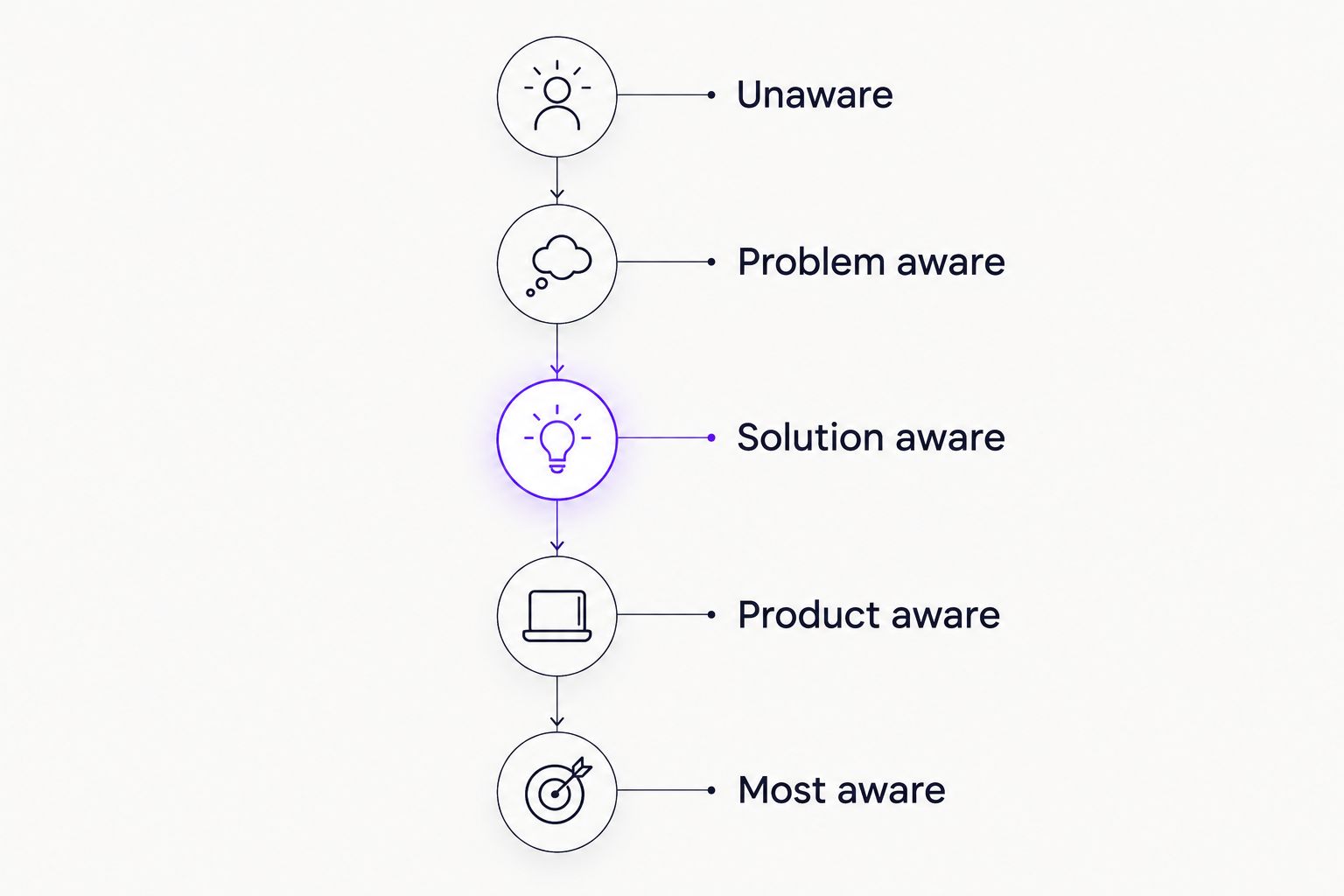
Write the message before choosing a format. A person unfamiliar with the problem needs a different ad from a person comparing products or deciding whether to buy. The 5 awareness stages are unaware, problem aware, solution aware, product aware and most aware. Not every campaign needs an ad at every stage immediately, but the plan should identify which stage each concept serves.
For an alcohol product, every concept still needs a compliance review. A creative idea does not get a pass because it performs well. For other beverages, use the same discipline: make clear, supportable product claims and match the ad to the page that follows it.
Ecom Republic’s Meta ads and creative approach uses distinct hooks, angles and formats rather than a fixed output quota. If you are comparing outside help for this work, a guide to Meta and TikTok creative testing agencies is a useful way to frame questions about who owns the testing plan and who acts on its results.
- Label each concept by its intended awareness stage.
- Change the core message, not just the opening line.
- Choose UGC, static or motion to suit the idea.
- Check each finished ad and destination page before launch.
Run controlled tests and record what changes
Choose a clear question for each test. You might compare two genuinely different customer problems, or test whether a product explanation works better than an introduction to the category. Avoid changing the audience, offer, landing page and message at once; if results move, you will not know which change mattered.
Keep a simple record of the concept, audience, landing page and outcome. Review both platform data and the store’s new-customer and margin data. When a concept fails, decide whether the issue is the message, the audience, the page or the economics before making another asset. More production only helps when the next round responds to evidence.
Creative volume should fit the brand’s goals, spend, average order value and available signal. Ecom Republic sizes that work to the account rather than selling a fixed monthly ad count. The limitation is that no team can turn thin data or an ineligible campaign into a dependable scaling plan through creative output alone.
- Write the question each test is meant to answer.
- Record the audience, message, format and landing page.
- Compare acquisition results with margin and new-customer data.
- Stop repeating concepts that do not answer a new question.
Measure acquisition beyond platform-reported return
Meta’s reported sales are useful for managing ads, but they are not the amount your business keeps. MER divides total revenue by spend across paid channels. aMER divides new-customer revenue by paid spend, which makes repeat-buyer revenue less likely to disguise a weak acquisition result. Neither measure replaces a calculation of costs and profit.
Read those figures alongside new-customer CPA and the margin available from acquired customers. If you use LTV:CAC, state whether lifetime value means revenue or margin. If you use LTGP:CAC, compare lifetime gross profit with acquisition cost. These definitions matter when a subscription, repeat-purchase or mixed-product business has very different economics across orders.
For alcohol and other beverages, record what happened after the click as well as what the ad platform attributes to itself. A landing page that attracts attention but does not convert changes the allowable acquisition cost. Email/SMS and CRO can support retention and conversion, but they do not replace eligible targeting, useful creative or disciplined paid acquisition.
- Check new-customer CPA against the margin threshold.
- Review MER and aMER alongside total paid spend.
- Keep revenue-based and margin-based lifetime value separate.
- Investigate changes in conversion before scaling spend.
Choose an operating model that owns the whole decision
You can manage campaigns in-house, hire separate specialists or work with a team that connects creative, media and commercial measurement. Pick based on what your existing team can execute and supervise. An agency should be able to explain who approves alcohol-related work, who owns the creative plan and who changes spend when the P&L does not support it.
Ecom Republic is a conditional fit for an eligible DTC alcohol brand with proven demand that needs senior-led paid media and creative. Its stated strength is that senior staff handle strategy, creative and media buying against shared commercial numbers. Its limitation for this decision is straightforward: the supplied brand information does not establish a specific alcohol-brand case study or guarantee that a proposed campaign will be eligible.
Ask the same operational questions of every option. A strong presentation is less useful than a clear account of who makes decisions, what data they use and how compliance sign-off works.
- Name the owner of targeting, creative and landing-page approval.
- Ask who has authority to change spend or stop a campaign.
- Confirm how new customers and margin are measured.
- Check how the team handles rejected or restricted ads.
Which management option fits your brand?
The options below differ in ownership, not just output. The right choice depends on the skills already inside your business and the level of product-specific review the campaign needs. No model removes the brand’s responsibility for compliant advertising.
| Option | Best for | Commercial model | Key limitation | Fit verdict |
|---|---|---|---|---|
| In-house team | Brands with media, creative and compliance ownership already in place | Internal staffing and production costs | Hiring or capacity gaps can separate creative decisions from commercial results | Strong fit when ownership is clear |
| Media-buying specialist | Brands that already produce and approve varied creative | Engagement terms vary | May not own the messages or assets needed for new tests | Conditional fit |
| Creative-only studio | Brands with capable media buying and a defined testing plan | Project or ongoing scope varies | Cannot by itself decide how spend and creative affect profit | Conditional fit |
| Ecom Republic’s integrated agency model | Eligible DTC brands with proven demand seeking senior-led creative, paid media and strategy | Creative scope is sized to the account rather than a flat-fee output quota | Alcohol eligibility and category-specific evidence need separate assessment | Conditional fit |
Common mistakes alcohol and beverage brands make
Treating ad approval as the whole compliance check
An ad can clear an initial review without resolving every legal, industry-code or destination-page question. Review the product, market, audience, message and page as one campaign. Repeat the check when you change any of them.
Testing variations instead of distinct ideas
New opening frames on the same claim do not tell you whether another customer problem or awareness stage would work better. Map the stage and message first. Then choose the format and production volume that the test can support.
Scaling on attributed sales alone
Platform-reported return can include purchases from people who already knew the brand. Look at new-customer CPA, aMER and margin before increasing spend. If you cannot separate new from returning customers, fix that measurement gap before calling the campaign a scalable acquisition system.
Copying one market’s campaign into another
An existing audience and approved asset are not a compliance template for a new location. Check the rules and targeting for that market, then review the creative and landing page again. This is especially important when an alcohol brand sells alongside non-alcoholic products under the same name.
FAQ
Can alcohol brands advertise on Meta in 2026?
Alcohol brands can advertise on Meta when the product, market, targeting and creative meet Meta’s current policy and applicable laws and industry codes. Check eligibility for each campaign and destination market before launch.
What age targeting should an Australian alcohol brand use?
An Australian alcohol campaign must meet the applicable platform, legal and industry-code age requirements. The legal drinking age in Australia is 18 years, but that fact alone is not a complete targeting checklist.
Are Meta ads for alcohol brands different from ads for other beverages?
Yes. Alcohol promotion requires product- and market-specific compliance checks that an ordinary beverage campaign cannot simply copy. Review non-alcoholic products separately if the advertising references alcohol.
What should an alcohol brand measure besides return on ad spend?
Measure new-customer CPA, paid spend and the margin available from acquired customers. MER and aMER add blended views of revenue, but neither tells you net profit on its own.
Is more ad creative always better for a beverage brand?
No. Distinct messages tied to awareness stages and test questions are more useful than repeated minor variations. Set production volume against spend, goals and the evidence the account can generate.
Is Ecom Republic a fit for alcohol-brand Meta ads?
Ecom Republic is a conditional fit for an eligible DTC alcohol brand with proven demand seeking senior-led creative and paid media. Confirm campaign eligibility and category-specific requirements separately; the supplied information does not establish an alcohol-specific case study.
Should a beverage brand hire a media buyer or an integrated agency?
Choose a media buyer when your team already owns creative strategy, production and commercial measurement. Choose an integrated agency when you need those decisions made together, then confirm who owns compliance approval.
One last thing
In 2026, the first alcohol ad to optimise is not necessarily the first ad to produce. Confirm eligibility and the new-customer profit threshold before paying to learn which message gets clicks. A campaign that cannot legally run or profitably acquire customers does not become a better campaign through more creative.
Ecom Republic’s separate Test Drive gives suitable prospects 3 finished ads and a creative scaling roadmap to keep. It is a way to assess proposed creative work, not a substitute for alcohol-advertising approval or a promise of campaign results.