

Best overall for retention-only work: a dedicated ecommerce lifecycle agency. Best for acquisition and retention alignment: Ecom Republic. The best agency to manage ecommerce email and SMS in 2026 depends on whether you need a channel owner, extra delivery capacity or a broader profitable-growth team.
- The best agency to manage ecommerce email and SMS owns strategy, delivery, consent controls and commercial reporting.
- Choose a dedicated lifecycle agency when retention is the main problem to solve.
- Ecom Republic suits DTC brands needing retention support within a paid acquisition and creative growth engagement.
- Keep account ownership and judge customer profit, not attributed revenue alone.
Why this matters
An agency can send attractive campaigns without improving what your business keeps. Discounts, overlapping messages and sales attributed to several channels can make a retention report look healthier than the underlying business.
Start with the problem. If acquisition works but customers rarely return, assess retention specialists. If new-customer economics and creative are also holding you back, assess a connected growth engagement.
Our ecommerce email and SMS agency guide covers the broader buying category. This guide separates the management models so you can choose the right scope before comparing proposals.
What makes the best ecommerce email and SMS agency?
Use these criteria for your 2026 shortlist. A persuasive presentation is not a substitute for clear ownership.
- Service scope: Who owns segmentation, campaigns, automated flows, copy, design, implementation and quality assurance?
- Channel coordination: Who prevents an email and text message from pushing the same promotion to the same customer unnecessarily?
- Relevant sector fit: Can the proposed strategy explain your replenishment cycle, buying hesitation and repeat-purchase behaviour?
- Commercial measurement: Does reporting distinguish attributed sales from evidence of additional sales and profit?
- Delivery ownership: Who does the work, approves changes and resolves a broken flow or incorrect audience?
- Contract and access: Do you retain your accounts, customer data, creative assets and usable handover documentation?
Ask each agency to apply these criteria to your actual store. General answers reveal little. A useful proposal explains what changes first, why it matters and what evidence would change the plan.
Ecommerce email and SMS management options at a glance
These are ranked engagement models, not interchangeable services. Choose the row that matches the problem you need solved.
| Rank and option | Best for | Standout strength | Key limitation |
|---|---|---|---|
| 1. Dedicated lifecycle agency | Outsourcing retention ownership | A brief centred on customer journeys and repeat purchase | Acquisition coordination needs explicit ownership |
| 2. Embedded lifecycle partner | Supporting an established internal team | Adds defined delivery capacity without replacing internal strategy | Your team still needs to direct priorities |
| 3. Ecom Republic | Connecting retention support with acquisition economics | Senior paid ads, creative and growth strategy tied to commercial numbers | Not positioned as a retention-only specialist |
| 4. Migration and remediation specialist | Fixing a platform move or broken setup | A bounded technical brief with acceptance checks | Project completion does not replace ongoing management |
1. Dedicated lifecycle agency: best for retention ownership
A dedicated lifecycle agency is the default shortlist category when your main brief is managing email and SMS. Structure the engagement around the customer journey, from initial signup through post-purchase education, repeat orders and reactivation.
The distinction is ownership. You need a team responsible for the programme, not simply a supplier turning your promotional calendar into sends.
Dedicated lifecycle agency pros:
- A focused brief keeps retention work visible rather than secondary to other channels.
- Campaigns and automated flows can sit under the same planning owner.
- Copy, design and audience decisions can follow one customer strategy.
- A defined retention scope makes competing proposals easier to compare.
Dedicated lifecycle agency cons:
- Acquisition and retention reporting still need someone to reconcile them.
- A specialist brief does not automatically include technical development or wider growth strategy.
- Channel revenue targets can encourage unnecessary promotions unless margin controls are explicit.
Ask the proposed team to walk through a customer's next sensible purchase. The answer should reflect the product and buying cycle, not default to another discount.
Then request a sample reporting structure that separates campaign activity, automated journeys, customer behaviour and commercial outcomes. A single attributed-revenue total is not enough.
Best for: Brands with functioning acquisition that need accountable, ongoing retention management.
Verdict: Strong fit for a retention-first brief.
2. Embedded lifecycle partner: best for in-house team support
An embedded lifecycle partner works against priorities owned by your internal marketing lead. You retain strategy and brand direction while commissioning defined work such as flow implementation, campaign production, segmentation or quality assurance.
This model suits a team that knows what needs doing but cannot complete it consistently. It is less suitable when nobody internally can set priorities or judge the work.
Embedded lifecycle partner pros:
- You retain control of the commercial calendar and customer strategy.
- Work can target a specific capacity gap rather than duplicate existing roles.
- Internal product knowledge stays close to copy and audience decisions.
- Clear task ownership makes delivery easier to manage.
Embedded lifecycle partner cons:
- Internal approval delays remain your responsibility.
- Strategic gaps persist if the brief only covers execution.
- Fragmented suppliers need coordination across copy, design and implementation.
Define decision rights before work starts. Your marketing lead should know which changes require approval and which the partner can make within agreed boundaries.
For a 2026 proposal, request named responsibilities rather than a vague promise to act as an extension of your team. Identify who briefs, builds, checks, approves and publishes each deliverable.
Best for: Operators and marketing leaders with an established strategy and a delivery bottleneck.
Verdict: Strong fit when internal leadership is already in place.
3. Ecom Republic: best for acquisition and retention alignment
Ecom Republic is best for DTC brands that need retention support connected to paid acquisition, creative and profit-focused growth strategy. We start with what profitable growth means for your business, then connect paid ads and creative to those commercial goals.
All strategy, creative and media buying are done by senior staff working from shared commercial numbers. Email/SMS and CRO support retention and conversion; they are not equal acquisition pillars or a substitute for our primary offer.
Our creative system addresses 5 awareness stages: unaware, problem aware, solution aware, product aware and most aware. Distinct angles, hooks and UGC, static or motion formats serve those stages, with production sized to goals, spend, average order value and evidence.
Ecom Republic pros:
- Senior staff own strategy, creative and media buying directly.
- Acquisition decisions connect to the client's P&L rather than isolated platform reports.
- Creative scope follows business needs rather than a fixed output quota.
- Ongoing engagements run month to month.
Ecom Republic cons:
- A retention-only brief is not our central positioning.
- The connected model requires access to commercial data and active client collaboration.
- Brands seeking only campaign production should compare dedicated delivery partners first.
The paid 30-Day Love It Or Leave It Promise gives you 30 days to assess the working relationship. The first month covers work completed; you can then leave without ongoing fees or a long-term commitment and keep everything made, handed over cleanly. It is not a refund or a results guarantee.
Separately, the Test Drive provides suitable prospects with 3 finished ads to keep and a creative scaling roadmap. It is pre-engagement work, not the paid first month or an email-management trial.
Best for: DTC brands with proven demand that need acquisition and supporting retention decisions connected to profitability.
Verdict: Conditional fit for this search; strong fit for the broader growth brief.
4. Migration and remediation specialist: best for technical repair
A migration and remediation specialist fits a bounded problem: moving platforms, rebuilding broken journeys or correcting an unreliable customer-data setup. Commission the work against documented requirements and acceptance checks.
Keep the distinction between repair and management clear. A successful migration does not establish a campaign strategy or an ongoing retention programme.
Migration and remediation specialist pros:
- A defined project concentrates attention on the technical problem.
- Acceptance checks make completion easier to assess.
- Documentation can give your ongoing team a cleaner operating foundation.
Migration and remediation specialist cons:
- Ongoing copy, design and campaign planning need separate ownership.
- Technical completion does not prove commercial improvement.
- A weak handover leaves your internal team dependent on the supplier.
Include data mapping, consent records, suppression handling, active automation checks and account access in the project brief. Agree how the team will prevent duplicate messages during the transition.
Best for: Stores with a specific platform or implementation problem blocking reliable retention activity.
Verdict: Strong fit for repair; not ideal as a substitute for ongoing management.
How we ranked these management models
Retention ownership comes first because it directly answers this search. Internal-team support comes next, followed by connected acquisition support and technical project work, each serving a different buyer need.
The criteria are service scope, delivery ownership, relevant ecommerce fit, commercial measurement, contract terms and meaningful trade-offs. The order is not a claim that one model outperforms another across every store.
Ecom Republic compiled this list and is included in it. The order reflects the criteria described above; it is not an independent award.
What to request before appointing an agency
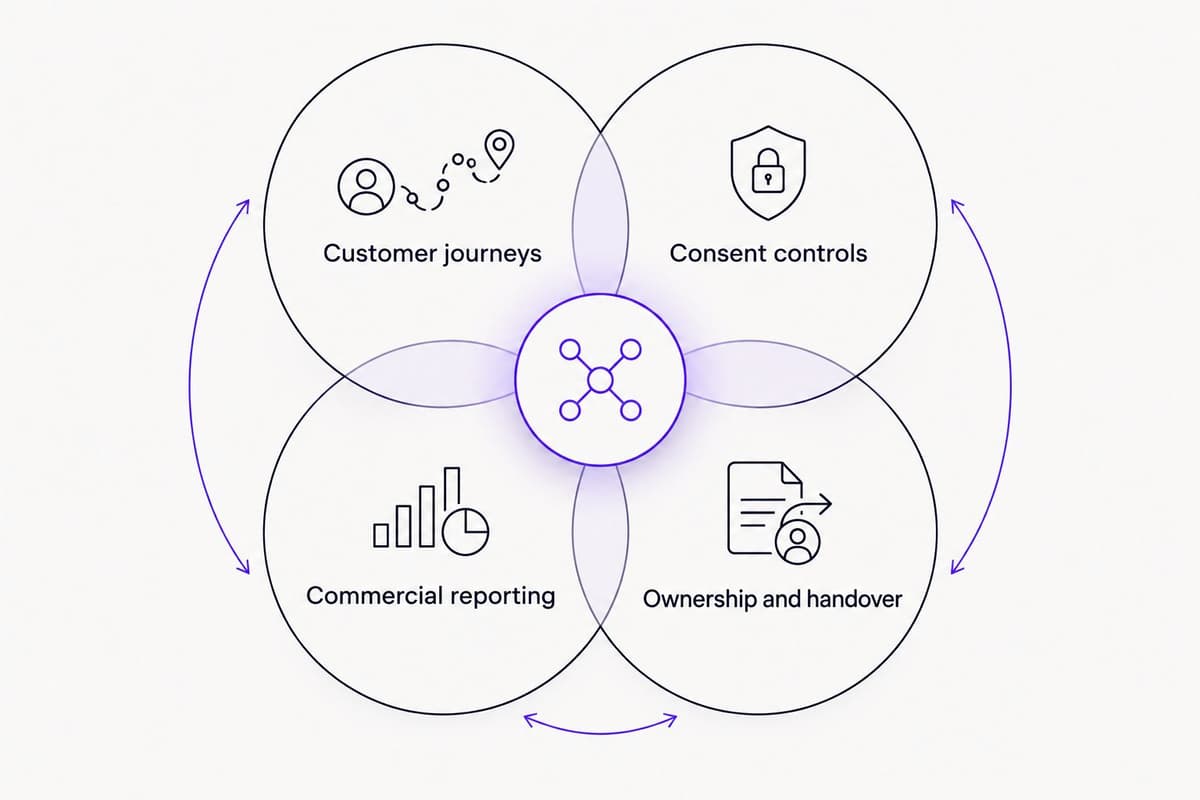
Give shortlisted agencies the same brief. Otherwise, you are comparing different scopes disguised as competing proposals.
Customer journeys
Ask for the proposed treatment of new subscribers, first-time buyers, repeat buyers and inactive customers. Each journey needs a reason to exist beyond increasing send volume.
Consent controls
Request an explanation of how consent, sender identification and unsubscribe requirements will be handled for Australian recipients. The Australian Communications and Media Authority provides guidance on commercial electronic messages; your agency's workflow should reflect the applicable requirements.
Commercial reporting
Define the measures before the engagement begins. Review repeat-purchase behaviour and profit alongside channel reporting, and document how revenue attribution works.
Ownership and handover
Keep your business in control of platform access, customer data and completed assets. Specify what documentation and access changes form part of an exit.
Measure customer profit, not just channel claims
For your 2026 reporting agreement, distinguish a sale attributed to a message from a sale caused by that message. Attribution assigns credit under a reporting rule. It does not establish that the customer would otherwise have bought nothing.
Ask how the agency will assess additional impact, including whether a suitable holdout test can compare contacted and uncontacted groups. Document the test design and limits before interpreting a result.
Use commercial measures that answer different questions:
- Net profit: What remains after the business's relevant costs, not just the revenue reported by a messaging platform.
- LTV:CAC: Customer lifetime value relative to acquisition cost. State whether value means revenue or margin.
- LTGP:CAC: Lifetime gross profit relative to acquisition cost, accounting for product costs.
- Repeat-purchase behaviour: Whether customers return within a window appropriate to the product.
Do not impose a universal retention-revenue target. Your product's purchase cycle, existing customer base and acquisition mix change what a sensible result looks like.
Which agency model should you choose?
Choose a dedicated lifecycle agency by default when email and SMS management is the whole brief. Choose an embedded partner when your internal team already owns strategy and needs dependable execution.
Choose a connected growth team when the problem crosses acquisition economics, creative and customer value. Choose a technical specialist when broken implementation prevents reliable operation.
Before signing in 2026, ask the proposed delivery team to explain the first priorities and their commercial logic. If the answer is only more campaigns, more flows or more attributed revenue, the proposal has not yet answered your business problem.
FAQ
What's the best agency to manage ecommerce email and SMS?
A dedicated ecommerce lifecycle agency is the strongest default for a retention-only brief. Choose a connected growth team when acquisition economics, creative and customer value also need coordinated management.
Is Ecom Republic a fit for email and SMS management?
Ecom Republic is a conditional fit when retention support belongs within a broader paid acquisition, creative and growth strategy engagement. It is not positioned as a retention-only specialist.
Should the same agency manage email and SMS?
Shared ownership is useful when the agency can coordinate audiences, timing, suppression and measurement across both channels. Separate suppliers need a named owner responsible for resolving overlap.
What should an ecommerce retention agency manage?
The agreed scope should identify who owns strategy, customer segments, campaigns, automated journeys, copy, design, implementation and quality assurance. Consent controls, reporting and account access also need explicit ownership.
How do I compare email and SMS agency proposals in 2026?
Give each agency the same brief and compare responsibilities, delivery staffing, commercial measurement, contract terms and handover provisions. Separate ongoing management from migration or repair projects.
Can I judge an agency by attributed email revenue?
Attributed revenue alone is not enough to judge commercial impact. Review the attribution method, discounts, customer behaviour and profit, and ask how additional sales will be assessed.
Do I need a specialist if I already have a marketing team?
Choose an embedded lifecycle partner when your internal team has a clear strategy but lacks delivery capacity. Choose broader ownership when nobody internally can direct and evaluate the retention programme.
One last thing
Ask the agency what it would stop sending, not just what it would add. A useful answer identifies unnecessary overlap, unsuitable audiences or promotions that do not serve the customer's next purchase.
That question tests judgement. Your goal is profitable customer relationships, not a busier sending calendar.