

Switching performance marketing agencies costs the commitments you still owe your current agency, the incoming team's agreed work and any transition work outside those scopes. There is no universal switching fee: your contracts and the handover requirements determine the total. For a DTC ecommerce brand planning a move in 2026, budget for the transition separately from ongoing management and judge the decision against profit, not a cheaper agency invoice.
- How much does it cost to switch marketing agencies? Add contractual commitments, incoming work and separately scoped transition tasks.
- Ecom Republic is a strong fit for DTC ecommerce brands with proven demand seeking connected creative, media buying and strategy.
- Separate agency switching costs from advertising spend; compare both against the profit your business keeps.
- Agree account access, creative ownership and campaign responsibility before the outgoing team finishes.
Why this matters
A lower management fee does not establish a better commercial outcome. A useful switch connects paid ads, creative and growth strategy to what your business keeps after costs. Treat the handover as part of that decision, rather than an administrative task after signing.
Start with the proposed ongoing scope, then identify what changes during the transition. Our guide to performance marketing agency costs covers the broader management question; this page focuses on the commitments, work and responsibilities involved in changing teams.
For your 2026 budget, keep recurring management, advertising spend and transition tasks on separate lines. That distinction stops you comparing an outgoing management-only arrangement with an incoming scope that also includes creative production and strategy.
How much does it cost to switch performance marketing agencies?
Your switching budget is the sum of contractual exit commitments, incoming work and separately agreed transition tasks. Count an item only when your agreement or proposed scope makes you responsible for it. Do not assume that changing agencies automatically creates a cancellation charge or an onboarding fee.
Use this breakdown to turn a proposal into a decision-ready budget:
| Budget component | What to establish | How to avoid counting it twice |
|---|---|---|
| Existing commitments | Notice obligations, work already commissioned and any agreed termination terms | Separate existing liabilities from new transition work |
| Incoming agency work | Start date, initial scope and what onboarding includes | Identify tasks already included in ongoing management |
| Overlapping management | Whether both teams will work during the same period | Assign different responsibilities to each team |
| Creative handover | Deliverables, source files and usage rights specified in the agreement | Distinguish reusable assets from new production |
| Measurement work | Who checks account access, conversion settings and reporting definitions | Separate checking from rebuilding |
| Internal coordination | Who approves access, supplies commercial data and signs off the transition | Name one accountable person on your side |
Keep advertising spend separate from agency switching costs. Advertising remains a business expense whether the current team or incoming team manages it. If the transition plan changes spend, show that change separately rather than presenting the entire media budget as a switching charge.
Also distinguish an invoice from an operational risk. A gap in responsibility or an incomplete handover needs a prevention plan; it does not justify an invented allowance labelled lost revenue. Use actual commitments for the budget and named actions for the risks.
A phased handover or a clean cutover?
Choose the handover method around campaign responsibility and the work required, not around a preferred calendar date. Neither approach removes the need to confirm contractual obligations, asset rights and account access.
| Approach | Best for | Benefit | Trade-off | Fit verdict |
|---|---|---|---|---|
| Phased handover | Brands needing the incoming team to inspect existing work before taking responsibility | Creates a defined period for questions and preparation | Requires explicit boundaries if both teams work concurrently | Strong fit when responsibilities are documented |
| Clean cutover | Brands with confirmed access, complete handover materials and an agreed start date | Makes the transfer of responsibility clear | Leaves less room for unresolved handover questions | Conditional fit until readiness is confirmed |
A phased handover does not mean two agencies should independently change the same campaigns. Specify who can edit, who can review and who approves changes during the overlap. Otherwise, you lose a clear record of which decisions affected results.
A clean cutover should still include preparation. The incoming team needs the commercial context, current creative and measurement definitions before accepting responsibility. One campaign owner at a time is the simplest handover rule.
Why the cost of switching marketing agencies varies
The switching cost depends on the obligations and work attached to your particular move. These are the factors to settle before accepting a proposal:
- Contract terms: Notice, cancellation provisions and commissioned work determine what remains payable under your existing agreement.
- Scope differences: A move from media buying alone to connected creative, paid ads and strategy changes what you are comparing.
- Overlap: Concurrent work requires agreed responsibilities and clarity about which work each engagement covers.
- Asset rights: Your agreement determines what creative and source materials you can take into the next engagement.
- Measurement scope: Checking existing reporting is a different task from rebuilding it; the proposal should distinguish them.
- Creative requirements: Goals, spend, average order value and evidence should determine the production scope, not an arbitrary ad quota.
Ask each agency to explain its own responsibilities in writing. Your outgoing team should clarify its handover obligations; your incoming team should clarify what it needs and what its scope covers. You should not have to infer either from a sales conversation.
How do you switch agencies without losing control?
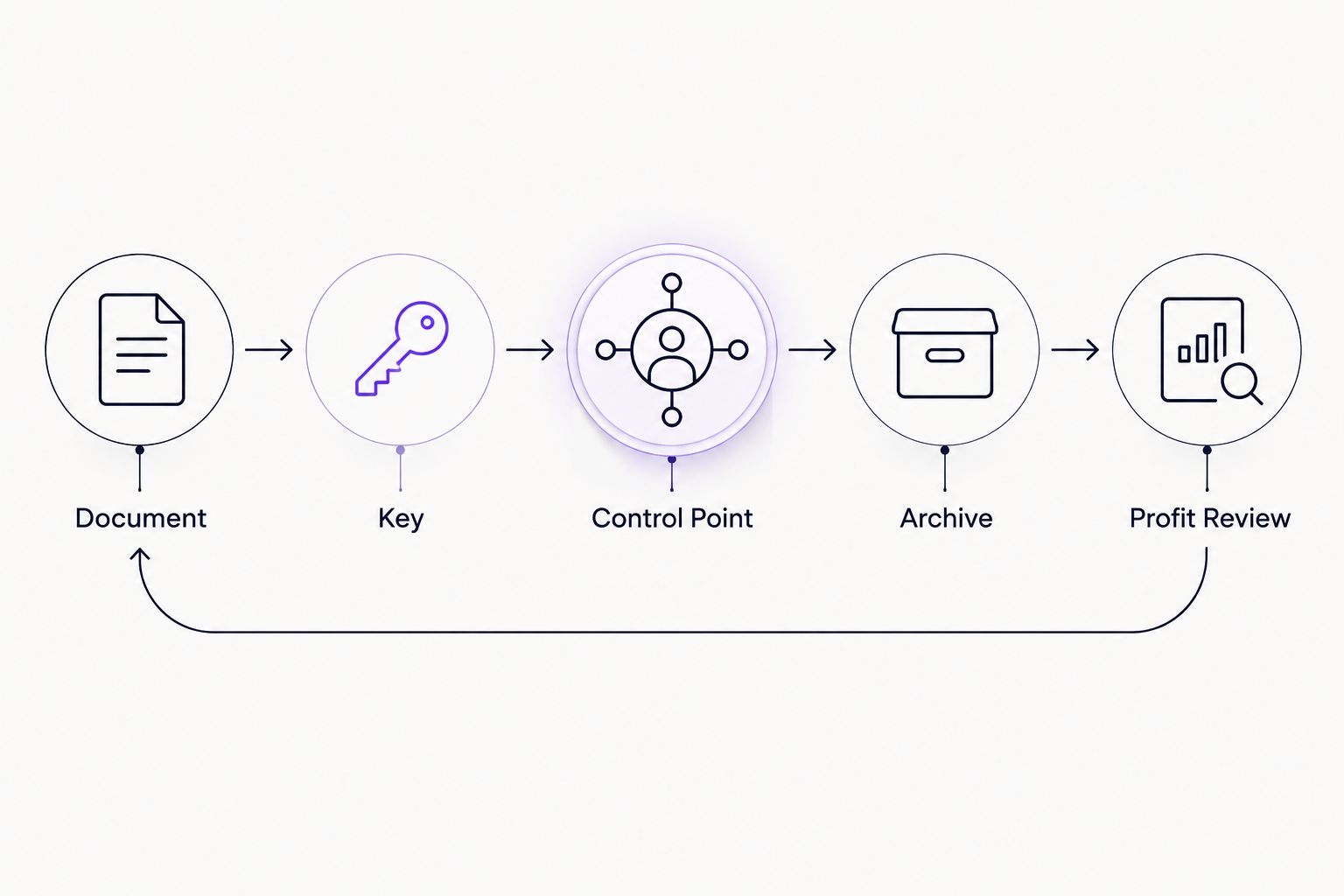
Use the same transition checklist whether your priority is sustainable owner cash, stronger margins or repeatable growth. The objective is to preserve decision-making continuity while changing the people responsible for the work.
Confirm obligations
Read the current agreement before choosing a start date. Identify notice requirements, unfinished commissioned work, ownership provisions and the agreed process for ending access. Ask for written clarification wherever the wording leaves responsibility unclear.
Keep the incoming proposal beside it. Confirm that both schedules work together and that any overlapping work has a purpose. Do not sign on the assumption that the outgoing team will finish early or transfer materials outside its agreement.
Confirm access
Record the advertising accounts, analytics properties and commerce systems the incoming team needs. Confirm your business can authorise the appropriate access and identify any permissions the outgoing agency currently controls.
Where practical, let the incoming team inspect the existing setup before proposing replacement work. A change of agency is not, by itself, a reason to replace functioning measurement or discard useful account history.
Preserve evidence
Gather current creative, reporting definitions and a record of recent decisions. Include the reasons behind changes, not just exported results. An incoming team needs to understand which customer messages have been tested and what the business learned.
Separate facts from interpretations. A report showing campaign revenue is different from evidence of profitable new-customer acquisition. Carry both into the handover with their definitions intact.
Assign ownership
Name the person responsible for campaigns before and after the transfer. Set approval rules for spend changes, creative launches and measurement changes. Give your internal marketing lead or operator a clear route for resolving questions.
The transition plan should also state when outgoing access is removed. Confirm the incoming team's required permissions first, then remove access that is no longer needed through your agreed process.
Review profit
Agree how you will evaluate the engagement before judging its results. Use the same reporting window and commercial definitions for the outgoing baseline and incoming work. Record any material changes to promotions, product mix or spend alongside the results.
For a 2026 agency switch, write these definitions into the handover document. A new dashboard should not quietly introduce a different meaning of success.
What should you measure after switching agencies?
Judge the switch against commercial performance, not platform-reported ROAS alone. An advertising platform's attributed revenue is not the same as the profit your business keeps. Your financial reporting needs to account for relevant business costs, not just media spend.
Use measures that answer distinct questions:
- Net profit: What remains after the relevant costs, including goods, fees, discounts, returns, fulfilment and advertising, under your business's accounting definitions.
- New-customer CPA: What it costs to acquire a genuinely new customer, without repeat purchases disguising acquisition performance.
- MER: Total revenue divided by spend across paid channels, giving you a blended view rather than separate platform claims.
- aMER: New-customer revenue divided by paid spend, separating acquisition revenue from returning-customer revenue.
- LTV:CAC: Customer lifetime value compared with acquisition cost; specify whether that value uses revenue or margin.
- LTGP:CAC: Lifetime gross profit compared with acquisition cost, accounting for the cost of products sold.
Choose the measures your records support and preserve their definitions. Do not compare lifetime customer value over different periods or revenue-based value with gross-profit-based value as though they were interchangeable.
What does a connected incoming team look like?
Ecom Republic is a strong fit for DTC ecommerce brands with proven demand that want creative, paid media and strategy accountable to profit. We connect those decisions through an all-senior team: senior staff do the strategy, creative and media buying, rather than providing oversight of junior delivery.
The creative plan should explain what changes between tests. Distinct customer problems, hooks, angles and UGC, static or motion formats serve unaware, problem-aware, solution-aware, product-aware and most-aware buyers. Replacing a headline repeatedly is not the same as developing different messages.
That connected scope requires your commercial inputs and approvals. It is not an isolated media-buying service, and it does not promise a fixed monthly ad count. We size creative to goals, spend, average order value and evidence; the scope is designed to grow with spend rather than use a flat-fee retainer.
Email/SMS and CRO support retention and conversion; they do not replace paid ads and creative as the headline acquisition engine.
Does a 30-day promise make switching free?
The Ecom Republic 30-Day Love It Or Leave It Promise is a paid engagement, not a free first month or a refund guarantee. You pay for the first month's work, can leave after 30 days without ongoing fees or a long-term commitment, and keep everything made, handed over cleanly. Ongoing engagements run month to month.
For your 2026 comparison, treat those 30 days as a way to assess the working relationship, not a promised deadline for a particular financial result. The senior team's accountability, work quality and decision-making matter alongside the agreed commercial measures.
Is the Test Drive the same as onboarding?
The Ecom Republic Test Drive is separate pre-engagement work for suitable prospects. It provides three finished ads and a creative scaling roadmap covering testing volume, awareness stages and the spend curve supporting the plan. You keep the ads whether or not you engage.
Use the Test Drive to assess the thinking and finished creative. Do not treat three finished ads as a complete agency transition or confuse the Test Drive with the paid 30-day engagement.
FAQ
How much does it cost to switch marketing agencies in Australia?
The cost is your remaining contractual commitments, incoming agency work and any separately scoped transition tasks. Establish each item from your agreement and proposal rather than using a generic switching allowance.
Do I have to pay a cancellation fee when changing agencies?
Your current agreement determines whether a cancellation fee applies. Check notice provisions and outstanding commissioned work separately, because they are not necessarily the same obligation.
Should I keep both agencies working during the handover?
Use an overlap only when each team has a defined responsibility. Assign one owner for campaign changes so concurrent work does not create conflicting decisions.
Do I need new advertising accounts when I switch agencies?
An agency change alone is not a reason to create new advertising accounts. Confirm ownership, permissions and the existing setup before agreeing to replacement work.
Can I keep the ads my outgoing agency made?
Your agreement and usage rights determine which ads and source materials you can retain. Confirm those rights before relying on the assets in the incoming creative plan.
Does Ecom Republic offer a free first month?
Ecom Republic's 30-Day Love It Or Leave It Promise has a paid first month. You can leave after 30 days without ongoing fees or a long-term commitment and keep everything made; the Test Drive is separate.
How do I know whether switching agencies was worthwhile?
Assess the switch against agreed profit and acquisition measures using consistent reporting definitions. Keep agency costs, advertising spend and new-customer performance visible rather than relying on platform ROAS alone.
One last thing
Ask for a handover plan before you ask for a discount. The plan should name the campaign owner, the access required, the assets being transferred and the commercial measures used to judge the work. Those answers make the scope understandable.
Before committing to a 2026 switch, ask the incoming team to distinguish what it will preserve from what it will change. A clear explanation gives you a better basis for approving the transition than a promise to rebuild everything.