

A performance marketing agency’s cost in 2026 depends on the agreed media-buying, creative and strategy scope; the useful answer is a written quote for the work your brand needs, not a headline monthly fee. Budget for advertising spend separately, then confirm whether creative production, measurement, setup and handover sit inside that quote.
- How much does a performance marketing agency cost? Compare the full paid-media and ad-creative scope, not fees alone.
- Ecom Republic connects senior-led paid ads, creative and growth strategy for DTC ecommerce brands with proven demand.
- Keep agency fees and advertising spend separate when assessing the total acquisition budget.
- Judge the engagement against profit and new-customer acquisition, not platform ROAS alone.
Why this matters
A fee comparison only helps when you compare the same responsibilities. A quote for campaign management is not equivalent to a quote that also covers customer research, finished ads and commercial analysis.
Your 2026 agency budget should support profitable acquisition without hiding work your team must still do. Our Ecom Republic approach connects paid ads, creative and growth strategy, with senior staff making decisions from shared commercial numbers.
Compare the total acquisition workload before comparing the agency fee. Otherwise, a smaller quote can leave you buying production elsewhere or managing the gaps yourself.
How much does a performance marketing agency cost in 2026?
The cost is the amount quoted for a defined scope and engagement model. Start by separating the agency’s work from the money paid to advertising platforms, then identify any production or implementation work outside the agreement.
The table below compares buying scopes, not standard packages or quoted offers. Use it to identify what you need and what remains your responsibility.
| Buying scope | Best for | What to confirm | Main advantage | Main trade-off |
|---|---|---|---|---|
| Media-buying management | Brands with reliable creative production already in place | Campaign ownership, optimisation, reporting and creative feedback | Clear responsibility for managing paid campaigns | Your team still needs to supply suitable ads and act on feedback |
| Ad-creative production | Brands with capable media buyers but a production gap | Research, concepts, formats, revisions and finished assets | Dedicated attention to the messages and assets being tested | Production alone does not provide spend management or commercial strategy |
| Connected creative, media and strategy | Brands that want one team responsible for the acquisition system | Who creates ads, manages spend and assesses commercial results | Creative and spending decisions share the same goals | Requires a broader working relationship and access to business data |
Ask each agency to quote against the same brief. Include your goals, current advertising activity, internal resources and the work you expect the agency to own.
A useful quote makes responsibilities visible. It also explains how scope changes when your advertising activity changes, rather than leaving that discussion until production becomes a bottleneck.
What belongs in the agency cost breakdown?
Request a written breakdown of the work, even when the agency presents a combined engagement. You need to understand what the agreement buys, not necessarily a separate fee for every task.
- Strategy: Commercial goals, customer priorities, testing direction and spend decisions.
- Media buying: Campaign planning, implementation, monitoring and optimisation.
- Creative: Customer research, concepts, hooks, scripts, production and revisions.
- Measurement: Reporting definitions, data access and analysis of business results.
- Setup and transition: Account access, initial implementation and responsibilities during handover.
- Scope changes: The process for approving additional work or changing production requirements.
Do not assume any item is included because an agency describes itself as full-service. Ask for the responsibility to appear in the agreement.
Media-buying management: confirm who supplies the ads
Media-buying management suits a brand that already has a dependable creative process. The agency manages campaigns while your internal team or another supplier produces the assets.
The advantage is a clear division of work. The limitation is that campaign feedback must reach the people making the next ads, with someone responsible for turning that feedback into a production brief.
Ask who decides what to test next. If the answer involves several teams, establish who owns the final decision and how the creative brief reaches production.
Strong fit: You already have the people and process to produce genuinely different ads. Conditional fit: You expect the media buyer to solve a creative shortage without a production scope.
Ad-creative production: confirm who owns the learning
A creative engagement suits a brand that has media buying covered but needs stronger messages or more production capacity. Assess the thinking behind the assets as well as the finished work.
Distinct customer problems, angles and formats provide different tests. Changing a colour or opening frame is not the same as testing a new reason to buy.
The advantage is focused production. The limitation is that finished assets need a testing plan, campaign execution and feedback from the people assessing results.
Strong fit: Your media team can brief, test and report on creative. Conditional fit: You need an acquisition strategy but are buying assets alone.
For a shortlist focused on this responsibility, see our guide to Meta and TikTok creative testing agencies.
Connected acquisition: confirm shared commercial ownership
A connected engagement brings paid ads, creative and growth strategy into the same working process. It suits brands that want the people making ads and managing spend to work from the same commercial goals.
The advantage is shared responsibility for what gets made, what gets tested and what happens next. The trade-off is the input required from your business: customer knowledge, margin information, reliable data and timely decisions.
Ecom Republic is a strong fit for DTC ecommerce brands with proven demand that want senior-led paid ads, creative and strategy judged against profit.
We do all strategy, creative and media buying with senior staff. Creative volume is sized to goals, spend, average order value and evidence, rather than a fixed output quota.
Email/SMS and CRO support retention and conversion; they do not replace paid ads and creative as the acquisition engine.
Why performance marketing agency costs vary
The right scope follows the work your brand needs. These factors give you a useful basis for discussing a 2026 quote without relying on an unsupported market average.
- Commercial goals: Sustainable owner cash and repeatable growth require an agreed definition of success. Tell the agency what the business needs to keep, not just what it needs to sell.
- Advertising spend: Creative production and decision-making must suit the activity being managed. Ask how the scope changes as spend changes.
- Creative requirements: New concepts, scripts and formats involve different work from resizing existing assets. Specify which responsibilities belong to the agency.
- Average order value and margin: Revenue per order does not show what remains after costs. Share the commercial context needed to judge acquisition decisions.
- Available evidence: Customer data, previous creative results and dependable measurement inform what to make next. Agree who supplies and interprets that evidence.
- Delivery ownership: A senior team doing strategy, creative and media buying is a different operating model from senior oversight alone. Ask who performs the work.
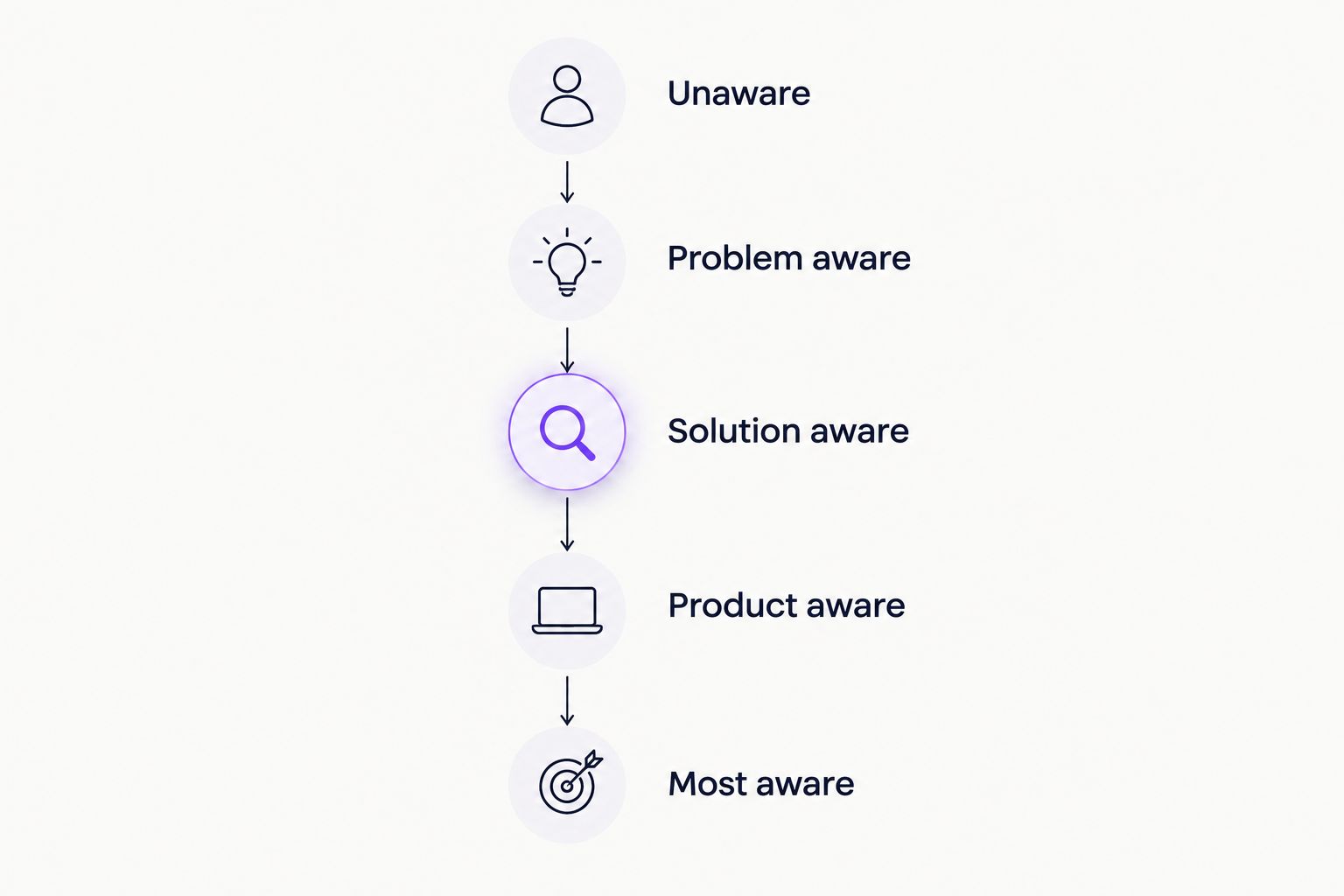
Creative scope should cover distinct awareness stages
A useful creative plan addresses buyers at different stages of understanding. That gives the production scope a purpose beyond filling a monthly asset count.
- Unaware: Introduce a customer problem or relevant situation.
- Problem aware: Show that you understand the problem the buyer recognises.
- Solution aware: Explain the type of solution and why it matters.
- Product aware: Address questions about the product itself.
- Most aware: Help an already-interested buyer make a decision.
These five awareness stages are a planning framework, not a promise to produce the same amount for each stage. Use customer language, media feedback and commercial results to decide where the next tests belong.
The production brief should explain the message being tested and why. An asset count tells you how much work arrives; it does not tell you whether the work tests different reasons to buy.
How do you compare agency quotes fairly?
For a 2026 agency decision, send the same scope questions to each shortlisted team. This gives you a comparison based on responsibility rather than presentation.
- Set the commercial goal. State whether you prioritise owner cash, margin, new-customer growth or repeatable acquisition.
- List internal capabilities. Identify who already handles production, campaign management and analysis.
- Define agency ownership. Name the responsibilities you want the agency to take over.
- Separate the budgets. Keep platform spend distinct from agency work and outside production.
- Agree measurement. Define new customers, revenue, acquisition costs and the reporting period.
- Confirm exit terms. Establish notice, asset ownership, access and handover before signing.
Ask each agency to explain its recommendation using your circumstances. A proposal should show why the scope fits your business, not simply repeat a package description.
Which numbers show whether the agency is paying its way?
Use the business’s profit-and-loss figures alongside advertising reports. Platform-reported return on ad spend, or ROAS, is not the final measure of what the business keeps.
- Net profit: What remains after the relevant business costs, including advertising and agency work.
- New-customer CPA: The cost of acquiring a genuinely new customer.
- MER: Total revenue divided by spend across paid channels.
- aMER: New-customer revenue divided by paid spend.
- LTV:CAC: Customer lifetime value compared with acquisition cost; specify whether value means revenue or margin.
- LTGP:CAC: Lifetime gross profit compared with acquisition cost, accounting for product costs.
These measures answer different questions. MER provides a blended revenue view, while aMER separates acquisition from returning-customer revenue.
Agree the definitions before judging the result. Use the same reporting window and cost treatment when comparing performance, and identify which figures come from your store, accounts or advertising platforms.
Does the agency fee include advertising spend?
Agency fees and advertising spend are separate budget categories; your agreement should state whether the quoted total contains both. Advertising spend pays for media, while the agency scope pays for the work around that media.
Request a total budget view showing agency work, platform spend and any outside production. That keeps a scope comparison from becoming a comparison of incomplete totals.
Should you choose the cheapest agency quote?
Choose the quote that fits the work and commercial responsibility you need, not the lowest fee in isolation. A narrower scope is sensible when your internal team already covers the remaining work.
The test is whether the combined arrangement works for your business. Include internal coordination and outside suppliers in that assessment, rather than treating the agency quote as the entire acquisition operation.
What does a 30-day agency promise actually cover?
Ecom Republic’s 30-Day Love It Or Leave It Promise covers a paid first month with the option to leave after 30 days without an ongoing commitment. It is not a refund or a guarantee of results within that period.
You keep everything we have made, handed over cleanly. Ongoing engagements run month to month, so continued work rests on the fit and the work rather than a long-term commitment.
The separate Test Drive provides 3 finished ads and a creative scaling roadmap for suitable prospects. You keep the ads whether or not you engage; it is not the paid first month.
FAQ
How much does a performance marketing agency cost in 2026?
The cost depends on the agreed media-buying, creative and strategy scope. Request a written quote that separates agency work, advertising spend and any outside production.
Does a performance marketing agency quote include ad spend?
Do not assume the quote includes ad spend. Ask the agency to identify platform spend separately from its fees and any additional production work.
What should an ecommerce agency quote include?
The quote should identify deliverables, working responsibilities, measurement, scope changes and engagement terms. Confirm who supplies creative and who decides what gets tested next.
Is creative production included in media buying?
Creative production is included only when the agreed scope says so. Confirm whether the agency produces finished ads or provides feedback for your team to act on.
How many ads should an agency make each month?
Creative volume should match goals, spend, average order value and available evidence. Assess the distinct messages and awareness stages being tested, not the asset count alone.
How does Ecom Republic’s 30-day promise work?
The 30-Day Love It Or Leave It Promise applies to a paid first month. You can leave after 30 days without ongoing fees or a long-term commitment and keep everything made, handed over cleanly.
Is the Test Drive the same as the paid first month?
The Test Drive is a separate pre-engagement offer for suitable prospects, with 3 finished ads and a creative scaling roadmap. You keep the ads whether or not you engage; it does not replace the paid first month.
One last thing
Before approving a 2026 proposal, ask who turns a disappointing creative test into the next production brief. Then ask who decides whether the next test deserves more spend.
Those answers reveal whether you are buying connected decision-making or separate tasks. Approve a scope with clear ownership from commercial goal to creative brief to spending decision.