
An ecommerce brand is ready to hire an agency when customers already buy the product, the business understands its margins, and paid ads plus creative need more expertise or capacity than the current team can provide. You also need enough cash to fund the work and advertising without depending on immediate results. Hire to improve a working business, not to outsource the question of whether anyone wants your product.
- When is an ecommerce brand ready to hire an agency? When proven demand, workable margins and delivery capacity align.
- Ecom Republic is best for DTC ecommerce brands with proven demand seeking senior-led, profit-focused paid acquisition.
- Choose agency scope around the acquisition bottleneck, not a revenue milestone or an arbitrary creative quota.
- Keep business profit, new-customer acquisition and cash requirements separate from platform-reported ROAS.
When is an ecommerce brand ready to hire an agency?
You are ready when you can explain what sells, what the business keeps from each sale, and what is stopping profitable acquisition. For your 2026 hiring decision, use the checks below before comparing agency proposals.
| Readiness check | Evidence to bring | What to do if it is missing |
|---|---|---|
| Proven demand | Actual purchases and customer feedback about why people buy | Establish demand before funding a larger acquisition system |
| Commercial clarity | Product costs, fulfilment, payment fees, returns and advertising costs | Build a shared view of margins and profit |
| Funded delivery | Cash allocated to agency work, media and creative testing | Decide what the business can sustain without immediate payback |
| A defined bottleneck | A specific constraint in creative, media buying or acquisition strategy | Diagnose the constraint before choosing a service scope |
| Operational readiness | Product availability, fulfilment capability and someone who can approve work | Fix delivery and decision-making gaps before adding demand |
At Ecom Republic, we treat proven demand and readiness to grow profitably as the public fit criteria. A revenue milestone alone does not establish either.
Why this matters
An agency adds specialist work, but your business still carries the commercial risk. More orders only help when the margin and cash left after acquiring and serving customers support your goals.
For an owner-operated brand, that goal might be dependable profit and cash the owner keeps. For a business preparing for an eventual exit, it might be repeatable acquisition, durable margins and stronger customer value. Agree on the business outcome before agreeing on channel targets.
The wrong brief asks an agency to make the dashboard look better. The right brief asks paid ads, creative and growth strategy to work together against a commercial target the business understands.
Check demand before buying more acquisition capacity
Proven demand means people buy your product and you have evidence about why. Bring actual order history, customer questions, reviews you have permission to use, and the messages that have already helped customers decide.
Separate product demand from channel performance. A brand with sales through another channel still needs to establish whether paid acquisition works commercially. Equally, an account with attributed purchases needs a closer look if repeat buyers account for much of the reported return.
Ask your team:
- Which products attract genuinely new customers?
- What problem or desired outcome makes those customers buy?
- Which objections delay the purchase?
- What evidence supports the claims you want to advertise?
- Are customers buying because of the product, or only during promotions?
You do not need a perfect account before hiring. You do need something more useful than a belief that better advertising will fix uncertain demand.
Know what you can spend to acquire a customer
Before hiring in 2026, establish what remains after product costs, discounts, returns, fulfilment and payment fees. Then consider advertising costs, agency work and the other expenses in the business P&L. A sales figure by itself cannot answer whether acquisition is affordable.
Do not confuse contribution from an order with net profit. Your accountant or finance lead should help define which costs sit in each measure, so the agency and business are making decisions from the same numbers.
Use these measures for different questions:
- New-customer CPA: Advertising cost per genuinely new customer. It separates acquisition from purchases by existing customers.
- MER: Total revenue divided by spend across paid channels. It gives a blended view rather than one platform's claimed return.
- aMER: New-customer revenue divided by paid spend. It keeps repeat-customer revenue from disguising acquisition performance.
- LTV:CAC: Customer lifetime value compared with acquisition cost. Specify whether lifetime value means revenue or margin.
- LTGP:CAC: Lifetime gross profit compared with acquisition cost. It accounts for the cost of products sold.
Platform ROAS is not the business result. It reports attributed revenue against ad spend, not the profit your business keeps. When discussing future customer value, distinguish recorded repeat purchases from an expectation that customers will return.
Identify the work that is holding growth back
An agency brief should describe a constraint, not simply request more sales. That constraint determines whether you need connected acquisition management or a narrower piece of specialist work.
Creative capacity
Your media buyer needs genuinely different messages to test, but the current team cannot consistently produce them. Replacing an image or changing a colour is not the same as testing a different customer problem, angle or objection.
Useful creative spans five awareness stages: unaware, problem aware, solution aware, product aware and most aware. Each stage asks a different question of the message. Someone discovering a problem needs different information from someone already deciding whether to buy your product.
Media buying and creative are disconnected
Creative production and campaign management happen separately, so results do not inform the next brief. The fix is a shared process: decide what to test, run the work, interpret the commercial outcome and use that evidence to guide the next decision.
Our guide to creative testing at scale for ecommerce brands explains the decision behind increasing testing scope. More production is a scope choice, not proof that an account is ready for it.
Commercial interpretation
Your team can read platform reports but cannot connect spend decisions with new customers, margins and business profit. That is a strategy and measurement problem. Buying more creative alone does not resolve it.
Choose the delivery model that matches the bottleneck
An agency is not automatically the best answer to every marketing gap. Compare the ownership you need and the coordination your team can provide before committing to a delivery model.
| Delivery model | Best for | Main advantage | Main trade-off |
|---|---|---|---|
| In-house team | Brands able to recruit, manage and support the required specialists | Direct day-to-day business context and internal ownership | The business must build and maintain the capability |
| Specialist freelancer | Brands with a defined task and someone to coordinate the wider work | Focused help for a narrow constraint | Integration across creative, media and strategy remains your responsibility |
| Connected acquisition agency | Brands needing paid ads, creative and strategy to operate together | Shared responsibility across the acquisition process | The business still needs to provide commercial data, approvals and operational support |
Choose connected agency delivery when the constraint crosses disciplines. Choose narrower support when the task is genuinely narrow and your existing team can own the rest.
For your 2026 shortlist, compare service scope, who does the work, who owns creative and media decisions, commercial reporting and contract terms. A long list of services tells you less than a clear explanation of how decisions get made.
Why agency readiness varies between brands
There is no useful universal revenue cutoff for hiring. These factors change what a sensible engagement looks like:
- Margins: Product economics determine how much acquisition cost the business can absorb.
- Available cash: The business must fund work and advertising without relying on an immediate result.
- Customer value: Recorded repeat purchasing changes the acquisition discussion, but expected future value needs separate treatment.
- Spend and evidence: Creative scope should fit the budget and the information available to guide decisions.
- Internal capability: Existing specialists and approval capacity determine which work an agency needs to own.
- Business goal: Sustainable owner cash and an exit-focused growth plan require different priorities.
A smaller brand with clear economics and a defined problem can have a better brief than a larger brand that cannot explain its acquisition costs. Size affects scope. It does not replace judgement.
Prepare a hiring brief your team can act on
Use this sequence to turn a general growth ambition into a workable agency discussion. Keep the brief plain enough that your founder, operator, marketing lead and finance contact can all understand it.
- Set the outcome. State what profitable growth means for the business. Include the cash and operational constraints that shape the decision.
- Share the economics. Bring product margins, advertising spend, new-customer data and the costs used in your profit calculation. Agree on definitions before setting targets.
- Name the bottleneck. Identify whether the missing work is strategy, creative, media buying or coordination across them. Include what the current team already handles well.
- Assign ownership. Name who supplies product information, approves claims and creative, and makes commercial decisions. Confirm who can resolve access and data issues.
- Agree the scope. Connect creative volume and media activity to goals, spend, average order value and evidence. Do not use an arbitrary ad count as the plan.
- Define the review. Ask what work, learning and commercial measures will be reviewed. Separate delivery commitments from performance expectations.
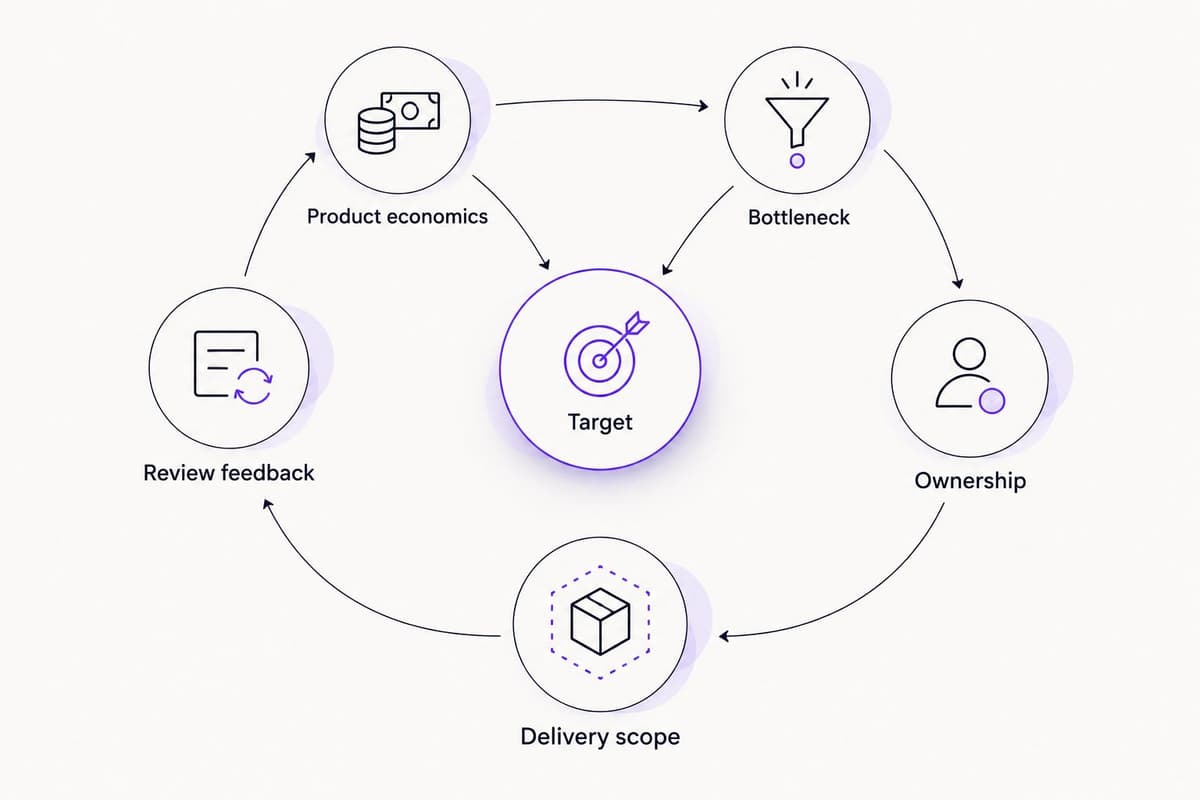
The brief should also distinguish acquisition work from supporting services. Email/SMS and CRO support retention and conversion; they should not obscure the primary question of how paid ads and creative will acquire customers profitably.
What working with a senior acquisition team requires
Ecom Republic is best for DTC ecommerce brands with proven demand seeking senior-led, profit-focused paid acquisition. We connect paid ads, strategically diverse creative and growth strategy, with all strategy, creative and media buying done by senior staff using shared commercial numbers.
The advantage is connected ownership of those decisions. The trade-off is that your business must participate: share its P&L inputs, supply product and customer knowledge, and make timely approvals. This is not a substitute for establishing demand or fixing fulfilment problems.
Our creative scope is sized to goals, spend, average order value and evidence, rather than a fixed monthly quota. That means the scope needs a commercial discussion; counting assets alone does not describe the work you need.
Separate the Test Drive from an ongoing engagement
The Test Drive provides three finished ads and a creative scaling roadmap for suitable prospects. You keep the ads whether or not you engage. The roadmap addresses testing volume, awareness stages and the spend curve supporting the plan.
The paid engagement is separate. Under the 30-Day Love It Or Leave It Promise, the first month covers the work completed; after 30 days, you can leave without ongoing fees or a long-term commitment and keep everything made, handed over cleanly. Continuing engagements run month to month.
That promise lets you assess how the team works. It is not a refund or a guarantee of results within 30 days. Judge the engagement on the agreed work and evidence, not on an assumption that every commercial question will be settled in the first month.
Should I hire an agency before paid ads are profitable?
Hire before paid ads are profitable only when proven demand and the available economics support a defined testing plan. An unprofitable account is a problem to diagnose, not automatic proof that agency delivery is appropriate. Agree on what must improve and what the business can fund while the team tests it.
Can a small ecommerce brand be ready for an agency?
A small ecommerce brand is ready when demand, margins, cash and the required scope align. For a 2026 hiring decision, business size is less useful than knowing which constraint paid ads, creative and strategy can address. Do not hire simply because another brand at a similar revenue level has done so.
Should I wait until I cannot manage marketing myself?
Do not use exhaustion as the hiring criterion. Prepare the brief while you still have enough attention to share customer knowledge, organise access and make decisions. If approvals are already stalled, establish an internal owner before adding another team.
FAQ
When is an ecommerce brand ready to hire an agency?
An ecommerce brand is ready when it has proven demand, understood margins, funded delivery and a defined acquisition constraint. The business also needs someone who can share commercial data and approve the work.
Do I need to reach a minimum revenue before hiring an agency?
A revenue milestone alone does not establish agency readiness. Assess proven demand, margin, cash, current spend and the scope the business actually needs.
Is an agency better than a freelancer for ecommerce marketing?
An agency fits a constraint spanning paid ads, creative and strategy; a freelancer fits a defined specialist task. With narrower support, your business remains responsible for coordinating the wider acquisition process.
What should I bring to an ecommerce agency consultation?
Bring your business goal, product economics, advertising spend, new-customer information and the constraint you want solved. Include your approval process and what the current team already owns.
Is a strong ROAS enough to show I am ready to scale?
A strong platform ROAS is not enough to establish profitable scale. Compare advertising performance with new-customer acquisition, product and fulfilment costs, business profit and cash requirements.
What does the Ecom Republic Test Drive include?
The Ecom Republic Test Drive includes three finished ads and a creative scaling roadmap for suitable prospects. You keep the ads whether or not you engage; it is separate from the paid first month.
Does the 30-day promise guarantee profitable results?
The 30-Day Love It Or Leave It Promise does not guarantee profitable results within 30 days. It is a paid first month with an option to leave afterwards, keep the work and avoid an ongoing commitment.
One last thing
Before signing in 2026, ask the agency to explain what would make it recommend holding spend rather than increasing it. The answer should connect customer acquisition, margin, cash and operational capacity. A profit-first brief must leave room for the right decision to be less spending, not more.