

Wellness brand Google Ads is paid search and product advertising aimed at winning profitable customers for health and wellbeing products. This 2026 guide connects campaign structure, compliant claims and creative with the margin your business actually keeps.
- Google Ads for wellness brands needs compliant product claims, accurate Merchant Center data and profit-based acquisition targets.
- Separate branded searches from new-customer acquisition before judging campaign performance.
- Ecom Republic suits established wellness brands seeking connected Google Ads, creative and profit-focused growth strategy.
- Start with eligible products and clear purchase intent; expand only when customer economics support more spend.
Why Google Ads matters for wellness brands
Wellness shoppers do not all want the same thing. Someone searching for a particular supplement ingredient has different questions from someone comparing yoga mats or looking for your brand by name. Your campaigns need to recognise those differences rather than send every search to the same collection page.
Google Ads connects those searches with relevant products. It does not remove the need for proven demand, credible claims or healthy margins. A sale attributed to advertising is not automatically an additional sale, and revenue does not tell you what the business kept.
For Australian wellness brands in 2026, the first constraint is product classification. Therapeutic goods, foods, cosmetics and general wellbeing accessories do not share one advertising rulebook. Google's advertising policies apply alongside Australian requirements, not instead of them.
If supplements are your main range, the Google Ads guide for supplement and vitamin brands addresses that narrower segment. The process below covers wellness ecommerce more broadly.
Build Google Ads around profitable acquisition
1. Check product eligibility and approved claims
Start manually with a spreadsheet covering each advertised product, its classification, proposed claims and destination page. Review Google's Healthcare and medicines, Misrepresentation and personalised advertising policies, plus the Australian rules relevant to the product. Google Merchant Center has separate product policies to check as well.
For therapeutic goods, confirm the applicable Therapeutic Goods Administration requirements, including permitted advertising claims and any required statements. Do not treat an Australian Register of Therapeutic Goods entry as blanket permission for every marketing claim.
Product eligibility, advertising language and audience eligibility are separate checks. A product being eligible for sale does not make every ad or targeting method acceptable. Health-related personalised advertising has specific restrictions; do not assume a remarketing audience is permitted simply because you can create it.
- Record product classification and the person responsible for approval.
- Match claims to evidence and applicable regulatory requirements.
- Review ads, product feeds and landing pages together.
- Check testimonials for implied treatment or guaranteed-outcome claims.
- Keep a record of disapprovals and the corrections made.
2. Set acquisition limits from your own margins
Use store orders and accounting records before opening the bidding settings. Calculate what remains from an order after product cost, discounts, payment fees, fulfilment, returns and other relevant variable costs. That contribution must cover acquisition and leave enough for overheads and profit.
Separate first-order economics from repeat purchasing. A replenishable wellness product and a durable accessory need different assumptions. Do not justify today's acquisition losses with repeat orders that have not happened.
Set a 30-day reporting view for recent acquisition and a 90-day customer cohort view where repeat purchases are relevant. These are reporting choices, not promises about when ads will become profitable. Compare cohorts at the same age so older customers do not make one campaign look unfairly stronger.
- Record contribution before advertising for each product group.
- Set an acquisition ceiling that preserves your required profit.
- Separate genuinely new customers from returning customers.
- Use observed repeat purchases rather than projected loyalty.
- Include overheads when judging business-level net profit.
3. Map search intent to campaigns and destinations
Build your first keyword map manually from product names, customer questions and the search terms already available in your account. Separate brand searches, category searches and product-specific searches. Exclude research-only terms when they do not support the campaign's purchase objective.
A query about an ingredient is not permission to promise a medical outcome. Answer legitimate product questions with accurate information, then give shoppers a clear path to the relevant product. Keep the ad's promise consistent with its destination.
At Ecom Republic, we connect Google Ads decisions with creative and growth strategy through an all-senior team. Shared commercial numbers shorten the gap between identifying a weak message and changing the campaign or asset. That model suits brands ready for ongoing acquisition work, not businesses seeking isolated account adjustments.
- Separate branded demand from non-brand acquisition reporting.
- Group keywords by purchase intent and product relevance.
- Send specific searches to specific products or collections.
- Add negative keywords based on irrelevant search terms.
- Check Australian location targeting and shipping eligibility.
4. Clean your product feed before expanding Shopping
Review your feed directly in Merchant Center before adding another management layer. Product titles, descriptions, identifiers, images and landing-page details must accurately describe what you sell. Fixing a mismatch is more useful than bidding harder on an unclear listing.
In wellness, product variants deserve particular attention. Form, size, quantity, ingredients and intended use should be clear where relevant. Do not add unsupported therapeutic language to a feed title to chase a search term.
Group products by commercial characteristics as well as category. A high-revenue product with weak contribution should not automatically receive the same acquisition target as a healthier-margin product. Read the Shopify to Google Merchant Center feed workflow if feed ownership is unclear.
- Resolve disapprovals before expanding the affected range.
- Match feed attributes with the destination product page.
- Supply accurate product identifiers where applicable.
- Use custom labels to organise meaningful margin groups.
- Check variant selection and mobile purchase paths.
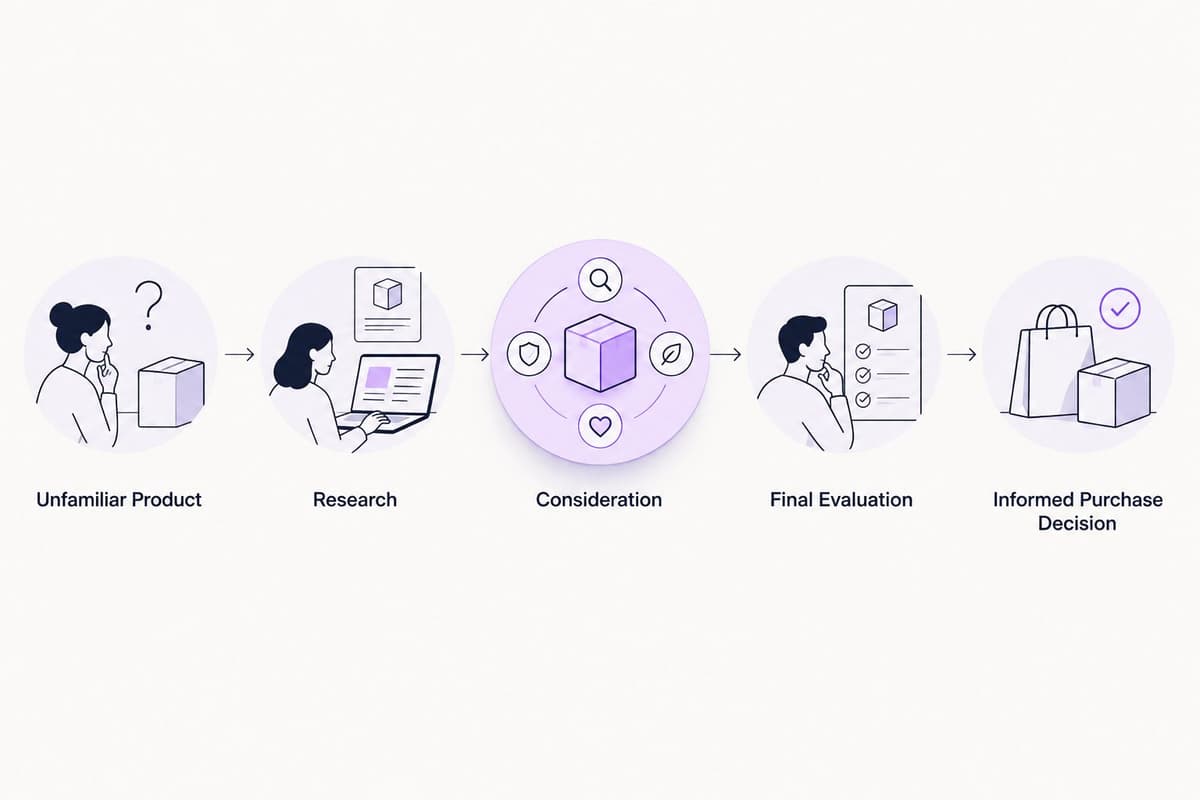
5. Match creative to customer awareness
Start with customer-service questions, reviews and product research. Identify what a shopper needs to understand before buying, then build distinct messages rather than cosmetic variations of one ad. Keep every version within the approved claims established earlier.
For your 2026 creative plan, use the five awareness stages as a briefing tool: unaware, problem aware, solution aware, product aware and most aware. Search ads should match expressed intent. Visual assets for Performance Max need their own clear purpose, not a recycled collection of unrelated images.
An unaware buyer needs context. A product-aware buyer needs help evaluating the product. Neither needs an unsupported promise. Use static, motion or customer-led content when it explains the product appropriately, with production volume sized to spend, goals, average order value and available evidence.
- Write a distinct customer question into each creative brief.
- Separate educational messages from product-selection messages.
- Show product use without implying unproven health outcomes.
- Keep ad claims consistent with the landing page.
- Record the angle tested, not just the asset filename.
6. Choose campaign types by their job
Use Search when you need direct control over keyword intent, messaging and destinations. Use Standard Shopping when product-led listings and product-group management suit the account. Consider Performance Max when its broader placement coverage fits your goals and you can supply reliable conversion data, product information and suitable assets.
None is a shortcut around weak economics. Performance Max's placement breadth also makes clean interpretation more demanding. Keep branded demand visible and assess the campaign against new-customer outcomes, not just its reported revenue.
For a 2026 test plan, establish the question before choosing the campaign. Testing whether a category attracts profitable first-time buyers is different from protecting branded searches. Avoid launching overlapping structures without a clear reason for each.
- Give every campaign a specific commercial purpose.
- Keep brand and acquisition performance distinguishable.
- Check conversion actions before enabling automated bidding.
- Inspect search terms and available placement reporting.
- Change structure only when it answers a defined problem.
7. Measure profit before increasing spend
Begin with a shared spreadsheet joining paid spend, store revenue, customer status and relevant costs. Reconcile purchase tracking against actual orders. Check for duplicate purchase events before interpreting a sudden improvement.
Platform ROAS is an attribution measure, not your business result. New-customer CPA is paid acquisition spend divided by genuinely new customers. MER is total revenue divided by all paid-channel spend; aMER uses new-customer revenue instead. Keep scope consistent when comparing these measures.
LTV:CAC compares customer lifetime value with acquisition cost, but specify whether value means revenue or margin. LTGP:CAC uses lifetime gross profit, accounting for product cost. Neither replaces a cash and net-profit view.
Use a 7-day operational review to catch tracking errors, rejected products and irrelevant searches. Judge commercial performance over a window that reflects conversion delay and the buying cycle. Daily noise is not a scaling instruction.
- Reconcile recorded purchases with store orders.
- Compare new-customer acquisition cost with contribution.
- Track branded revenue separately from acquisition evidence.
- Review customer cohorts at equivalent ages.
- Increase spend only while profit and cash requirements remain acceptable.
Compare management options for wellness brands
Choose delivery ownership after defining the work. A specialist media buyer cannot fix an unapproved product claim alone, and a creative team cannot judge acquisition economics without access to the numbers.
| Option | Best for | Main advantage | Key limitation |
|---|---|---|---|
| In-house management | Brands with accountable internal media, creative and commercial owners | Direct access to product knowledge and daily business decisions | Requires enough internal time and relevant skills across the work |
| Specialist Google Ads freelancer | Brands with a clear account scope and established creative support | Focused channel ownership | Product compliance, creative production and commercial analysis still need explicit owners |
| Ecom Republic | Proven-demand DTC wellness brands wanting connected Google Ads, creative and growth strategy | All strategy, creative and media buying are delivered by senior staff using shared commercial numbers | Not ideal for pre-revenue brands or creative-only briefs |
Ecom Republic is a strong fit for proven-demand wellness brands seeking Google Ads and creative tied to profit. We size creative scope to the work your spend and evidence support, rather than a fixed ad quota. You still need clear product information, approved claims and access to commercial data.
Email/SMS and CRO support retention and conversion; they do not replace the paid acquisition engine. If your immediate need is only a narrowly defined technical fix, a focused specialist brief is the better starting point.
Common mistakes wellness brands make
Treating health language as ordinary sales copy
A customer testimonial can imply a therapeutic benefit even when your headline does not. Review the whole advertisement and destination, including images and customer statements. A disclaimer does not make an unsupported claim acceptable.
Using sensitive health interests as an audience plan
Do not build targeting around an assumed diagnosis or condition without checking Google's personalised advertising rules. Separate the legality of the product claim from whether the audience method is permitted. Both need approval.
Letting branded sales prove acquisition success
People searching your business name already know you. Those orders belong in reporting, but they do not independently establish that Google Ads is creating new demand. Compare branded performance with non-brand acquisition and genuinely new customers.
Scaling replenishment assumptions instead of evidence
A product being consumable does not prove customers will reorder. Use actual purchase cohorts and margin-aware customer value. Keep your 2026 acquisition ceiling grounded in observed behaviour, not the subscription or repeat-purchase story you hope to build.
FAQ
Are Google Ads worth it for wellness brands?
Google Ads is worth testing when eligible wellness products have proven demand and enough margin to fund acquisition. Judge the test on genuinely new customers, contribution and business profit, not clicks or platform ROAS alone.
Can wellness brands advertise supplements on Google?
Some supplements are eligible, but eligibility depends on the product, claims, market and applicable Google policies. Australian advertisers must also meet the relevant local requirements; product approval does not authorise every advertising claim.
Is Search better than Performance Max for wellness products?
Search is the clearer fit when direct keyword and message control is the priority. Performance Max suits broader placement coverage, but needs reliable conversion data, suitable assets and careful separation of branded demand from acquisition evidence.
Can a wellness brand remarket to people interested in a health condition?
Do not assume condition-related remarketing is permitted. Google's personalised advertising policies restrict sensitive health-based personalisation, so check the audience method separately from the product's advertising eligibility.
What should wellness brands measure besides ROAS?
Measure new-customer acquisition cost, contribution, net profit, MER and aMER. Use customer lifetime value only with a defined observation window and a clear distinction between revenue and margin.
How much should a wellness brand spend on Google Ads?
Set spend from your acquisition ceiling, available cash and a defined test question. There is no universal budget that establishes profitability; the campaign must produce enough useful evidence without exceeding your commercial limits.
Do wellness brands need an agency to run Google Ads?
An agency is not a prerequisite for running Google Ads. Choose one when connected media buying, creative and commercial analysis address a genuine internal gap, and confirm who owns product compliance and approvals.
One last thing
Before increasing spend, compare your strongest product by attributed revenue with your strongest product by contribution after acquisition. They answer different questions. If those products differ, adjust campaign priorities before asking the account to find more buyers.